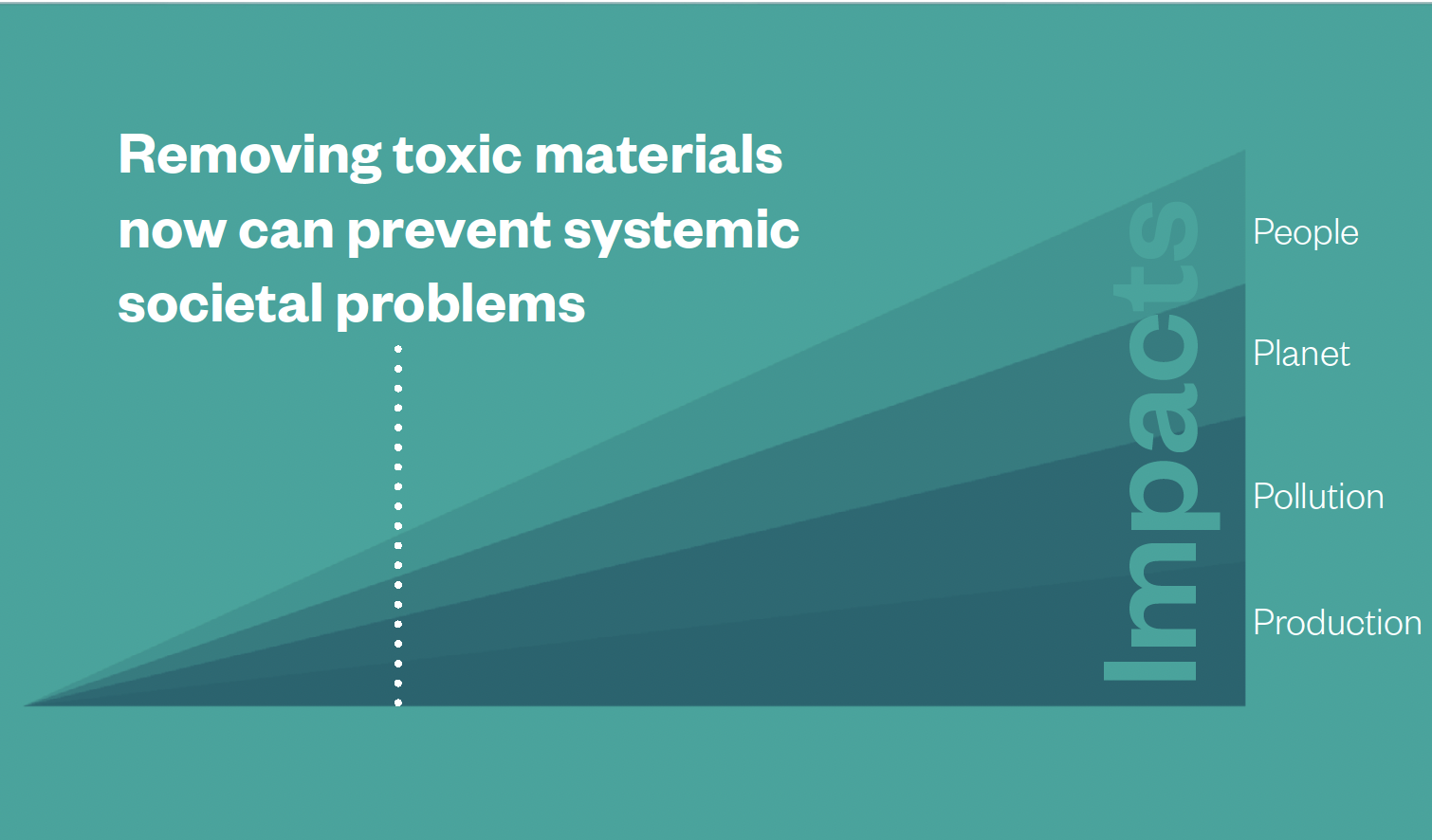
Toxic materials in renewable energy are a critical problem, and safer solutions for certain applications have not been developed—yet. Following are a few of the specific reasons why the world needs CoRE.
Technical performance is often prioritized over environmental and human health.
New molecules and materials are designed in a lab to perform a specific function, and often use hazardous chemicals to deliver functional and technical performance needs, despite the devastating impact on people and the planet.
Scientific evidence shows that it is not possible to manage all of the risks safely.
We mistakenly assume we can manage exposure risks to all hazardous substances and remediate them at the end of their lifecycles. However, many toxic chemicals cannot be managed safely. Every day they are used puts more people at risk.
Toxic chemicals often pose the greatest risk to the most vulnerable communities.
As the UN noted, “...the burden of contamination falls disproportionately upon the shoulders of individuals, groups and communities that are already enduring poverty, discrimination and systemic marginalization.”
UN General Assembly, Human Rights Council, The right to a clean, healthy and sustainable environment: non-toxic environment, 28 February–1 April 2022
Safer chemistries are not always available.
While current tools and platforms (including GreenScreen, Pharos, and ChemFORWARD) identify known hazardous substances and alternatives, CoRE works with the not-yet-known. CoRE steps in where safer alternatives don’t yet exist—for example, with PFAS and NMP, a widely used solvent.
Accelerated solutions are required to save lives.
We need to work faster. Creating safer materials and chemicals typically takes years or even decades, leaving millions of people at more risk. The impact of toxic materials created today may be felt for generations.