

CoRE offers a unique combination of factors including a benign-by-design approach, “molecules to neighborhoods” platform, highly specialized technical expertise, a world-class team, and proven results.
A benign-by-design approach eliminates toxicity at the source.
Without immediate action, toxic substances risk being locked into the very supply chains meant to deliver a clean energy future. Our goal is not to simply control or remediate hazardous chemicals, but to eliminate them completely through our “benign-by-design” approach, which embeds reduced toxicity at the molecular level. Given the renewable industry’s long production cycles and lifecycles, we have a once-in-a-generation opportunity to ensure clean energy is non-toxic.
CoRE’s “Molecules to Neighborhoods” platform addresses toxicity at every stage, with a focus on vulnerable populations.
Our unique “Molecules to Neighborhoods” approach is designed to rethink hazardous materials from the molecular design stage through their environmental and human health impacts.
While most organizations focus on only one or two metrics, our work spans the entire product lifecycle—from mining and transportation through manufacturing and decommissioning.
Most science-based initiatives have prioritized industry needs and standards; in contrast, CoRE is primarily guided by documented evidence of harm to vulnerable populations, including workers and frontline communities.
To address the greatest harms as quickly as possible, CoRE partners with environmental justice leaders from the beginning.
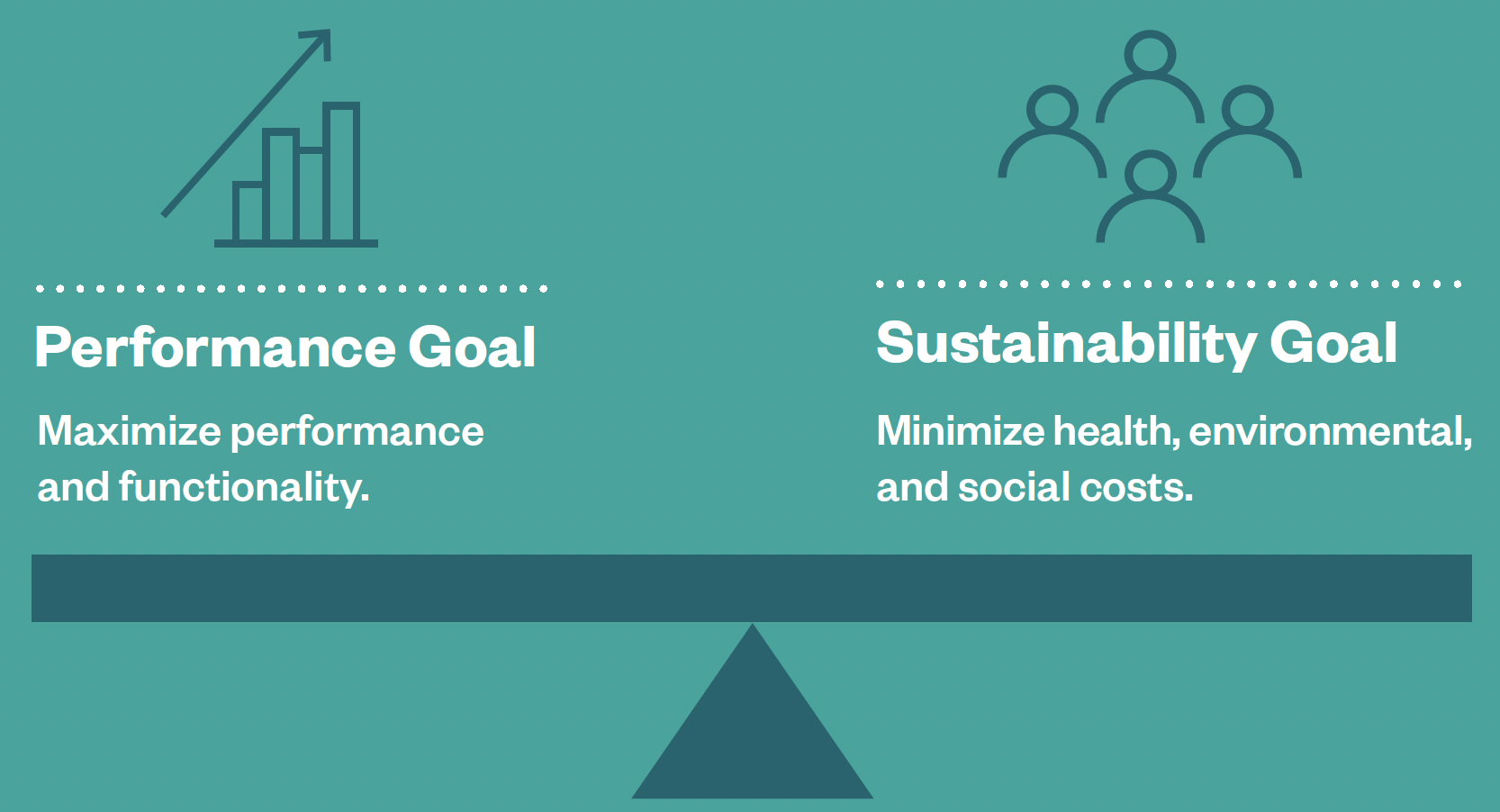
CoRE’s platforms balance sustainability and performance.
PFAS’s technical performance stems from the same persistence that also makes it environmentally and biologically harmful. Understanding these types of trade-offs is central to our innovation approach. At CoRE, we identify alternative materials that minimize the harmful impact on society while still meeting the required performance criteria.
CoRE advances the responsible use of AI to accelerate the computational design of safer materials and chemistries.
At CoRE, AI is not just a tool—it is a framework for responsible innovation. The CoRE Science Platform accelerates the computational design of safer materials and chemistries while minimizing the environmental footprint of data-intensive modeling. It enables AI-driven exploration and screening to identify safer alternatives rapidly, providing science-based guidance for chemical substitution and design. CoRE also leads the development of benchmarking and uncertainty assessment protocols that define how AI can be used responsibly to assess materials and chemical hazard impacts.
CoRE brings together world-class experts across diverse disciplines.
Academics and environmental advocates rarely work together proactively—which is one reason why scientists create products that inevitably pollute frontline communities. At CoRE, we bring all stakeholders together to identify harms, share data, and work together toward common goals. Our team includes the founding leader of materials informatics, an environmental advocate who spearheaded the passage of the first U.S. electronics recycling legislation, a social entrepreneur personally endorsed by Archbishop Desmond Tutu, and many other experts from diverse fields.
CoRE’s work is already used worldwide.
CoRE’s paradigm is not theoretical—it has been tested and proven effective across multiple chemistries of high concern (PFAS, NMP, lead-based, and perovskite solvents) that are central to renewable energy supply chains. In addition, our methodologies are broad enough to be used across applications and industry sectors, even as technologies evolve. Authoritative agencies (including the U.S. Environmental Protection Agency and United Nations) and leading companies have adopted our findings and used them to inform their work.