

Learn more about our published papers, reports, webinars, and news from CoRE.
Media Inquiries
Alexandra McPherson
alexandra@cleanproduction.org
(716) 572-2266
Working Toward Safer Chemicals in Solar Panel Manufacturing by Understanding Current Usage and Hazard Levels
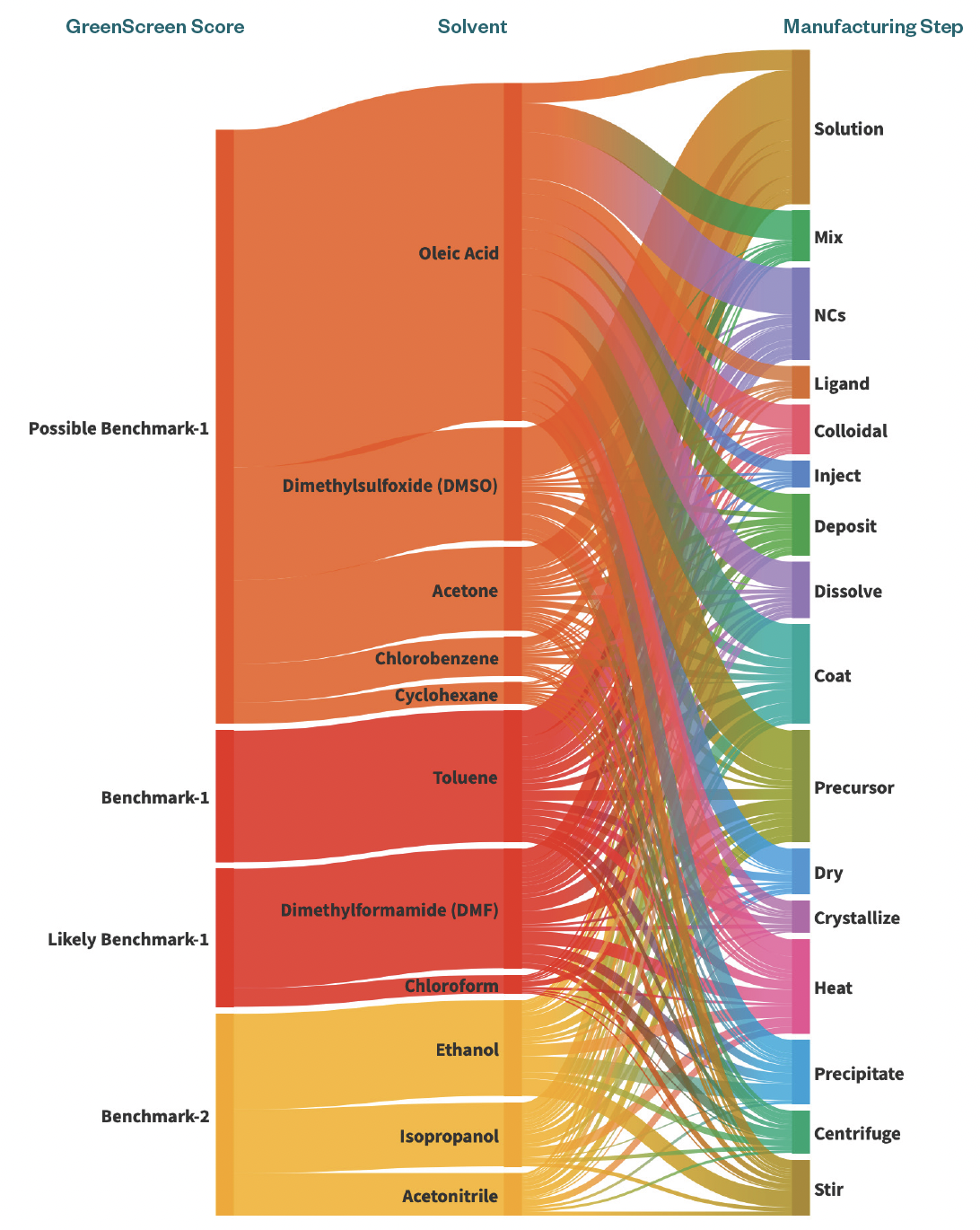
The CoRE team analyzed 30,000+ journal articles, extracted insights about real-world chemical usage, used GreenScreen® for Safer Chemicals assessment tools to identify the most hazardous chemicals, and created data visualizations to share information.
Some chemicals used to manufacture solar panels are toxic. However, there is little publicly available information about these chemicals.
To work toward finding safer substitutions, the CoRE team:
Used AI to analyze the published literature and determine which chemicals are used, how they’re used in the manufacturing process, and identify chemical pairings
Used the GreenScreen® for Safer Chemicals (an independent evaluation tool) to classify chemicals based on robust, science-based hazard criteria
Created data visualizations (Sankey diagrams) to make it easier to understand relationships between chemicals
CoRE’s visualizations help answer a variety of questions, including:
How are solvents and perovskites used together?
How hazardous is each solvent, and how often is it used with each perovskite?
How are solvents used throughout the manufacturing process?
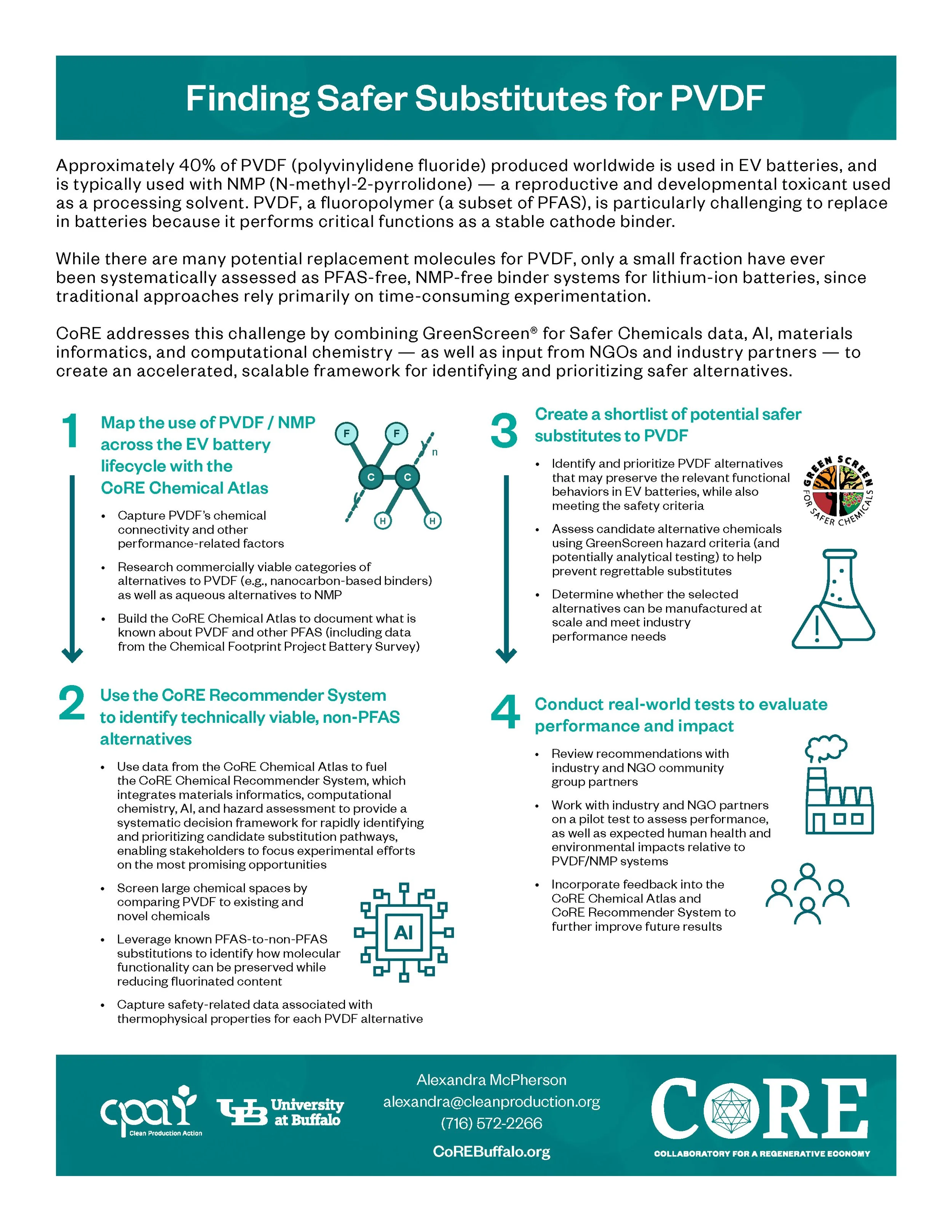
Finding Safer Substitutes for PVDF: Overview
Learn how CoRE is addressing this challenge by combining GreenScreen® for Safer Chemicals data, AI, materials informatics, computational chemistry, and input from NGOs and industry partners.
PVDF, a fluoropolymer (a subset of PFAS), is typically used with NMP, a solvent that is a reproductive and developmental toxicant.
Worldwide, approximately 40% of PVDF is used in EV batteries
CoRE is finding safer substitutes by:
Mapping the use of PVDF / NMP across the EV battery lifecycle with the CoRE Chemical Atlas
Using the CoRE Recommender System to identify technically viable, non-PFAS alternatives
Creating a shortlist of potential safer substitutes to PVDF
Peer-reviewed paper authored by experts from CoRE
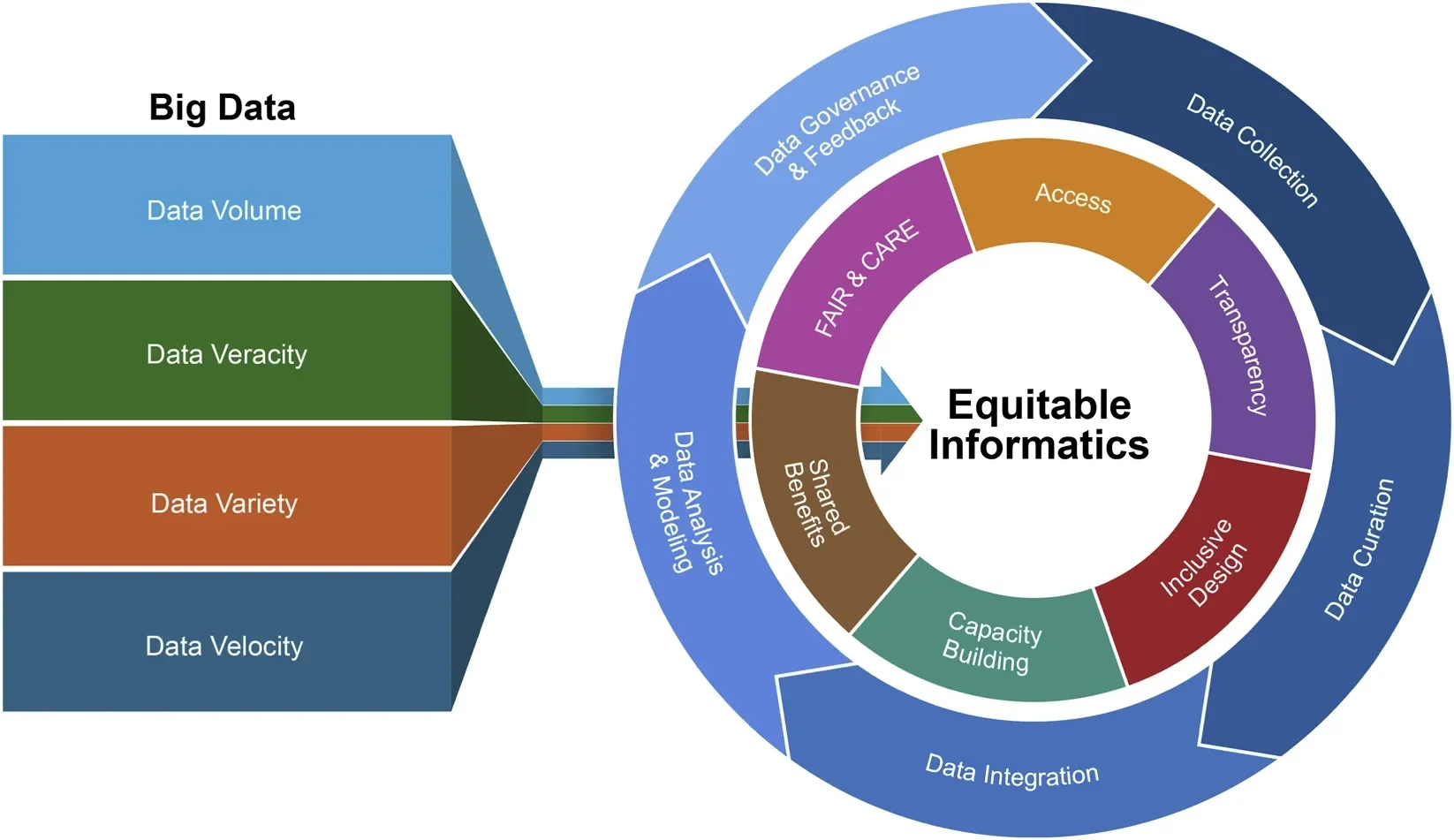
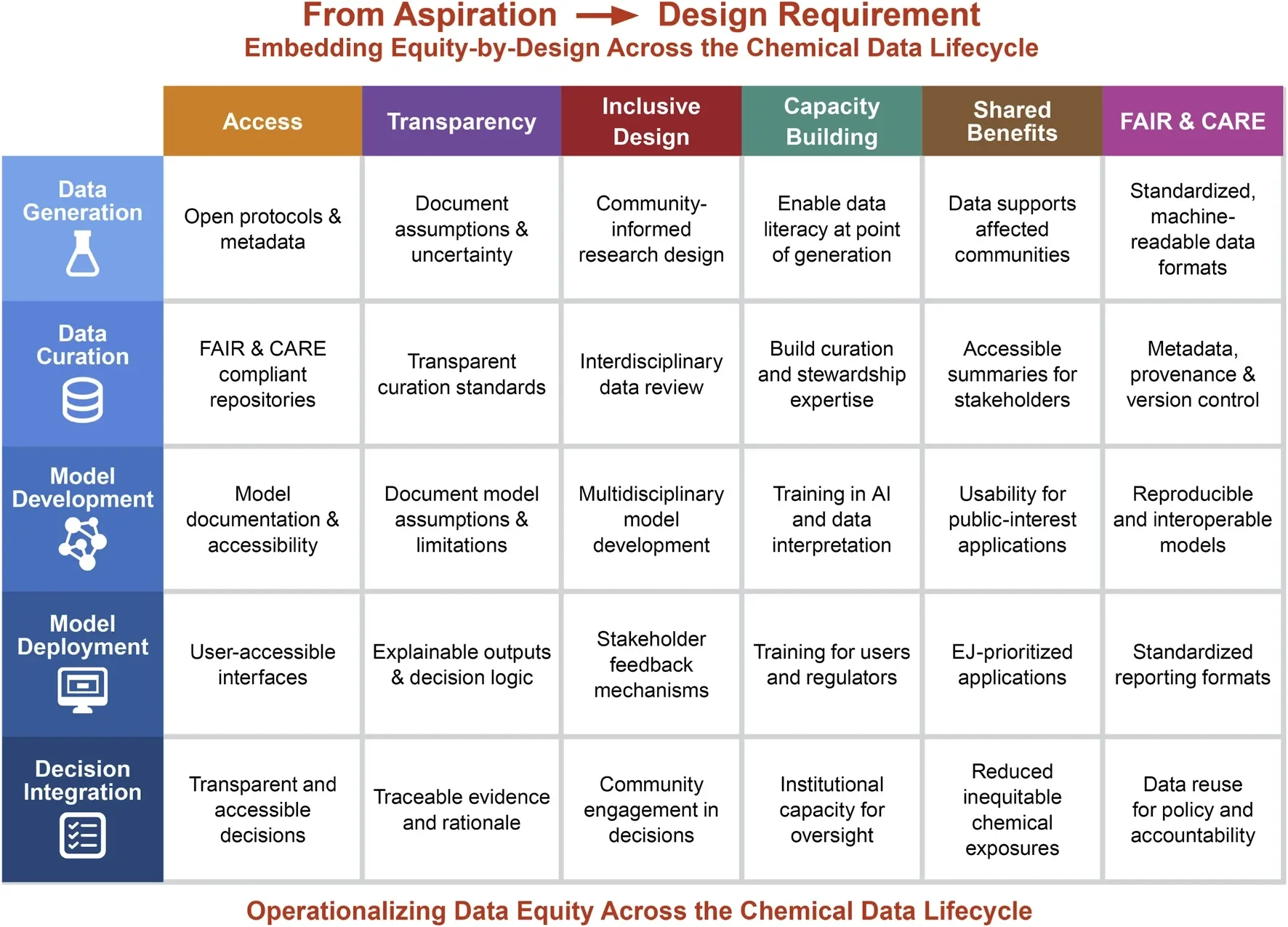
Data equity for sustainable chemistry: an informatics governance framework for responsible chemical innovation and environmental justice
AI and other technologies shape decision-making, but also have the potential to reproduce inequities and reinforce disparities
Data equity can help ensure that “AI-enabled chemistry supports, rather than hinders, sustainable development and environmental protection”
A proposed framework (“Access, Transparency, Inclusive Design, Capacity, Shared Benefits, and FAIRness”) would embed equity in evolving infrastructures, aligned with the UN Sustainable Development Goals.
Published in Frontiers in Environmental Science, April 19, 2026, by Arthur Fong, Alexandra McPherson, Mark Rossi & Krishna Rajan
Webinar: Accelerating More Sustainable EV Battery Design Processes from Molecules to Neighborhoods
In this webinar, we showcased innovative solutions for toxic reduction in the large- and mid-format battery industry, focusing specifically on eliminating PFAS and harmful solvents in EV and storage batteries.
Moderator: Alexandra McPherson, Clean Production Action, Director of Investor Environmental Health Network
Speakers: Chris Helt, Clean Production Action, Director Greenscreen; Helen Holder, formerly of ionobell (battery start-up) and HP; Krishna Rajan, UB Materials Design and Innovation, School of Engineering and Applied Science.
Overview Brochure
Learn why CoRE is needed, and what makes CoRE unique.
For an in-depth analysis of the outcomes CoRE has achieved through JPB Foundation investment, please contact:
Alexandra McPherson
alexandra@cleanproduction.org
( 716 ) 572-2266

Peer-reviewed paper authored by experts from CoRE and Apple
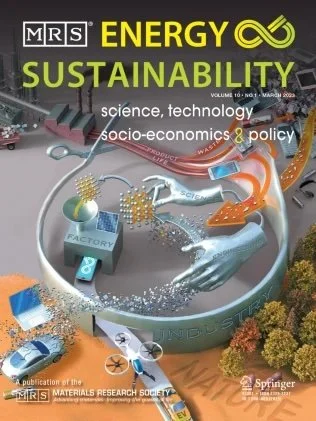
Building a roadmap for safer and sustainable material chemistries: Addressing the PFAS problem through informatics and data-driven chemistry
Chemical pollution has surpassed safe levels for the planet and humanity
Time is of the essence; we need a paradigm shift in material innovation
An accelerated approach leveraging AI can expedite the creation of inherently safer and better-performance materials and chemicals
A new information network will promote progress and environmental justice
Published in MRS Energy & Sustainability, November 25, 2024, by Arthur Fong, Alexandra McPherson, Mark Rossi & Krishna Rajan
Funding Prospectus
CoRE is currently seeking funding to close the gap between our current impact and our potential to design renewable energy solutions that are inherently safer for people and the planet.
For an in-depth analysis of the outcomes CoRE has achieved through JPB Foundation investment, please review our Funding Prospectus, or contact:
Alexandra McPherson
alexandra@cleanproduction.org
( 716 ) 572-2266
Solar Supply Chains
The Business Case for Effective Management of Environmental and Human Rights Impacts
Renewable energy is essential to solving our climate and pollution crisis. Domestic solar deployment in the U.S. is expected to nearly quadruple over the next decade. Yet this growth comes with attendant risks, including:
Import restrictions from human rights abuses in mining and sourcing
Reputational risks from using toxic chemicals in solar supply chains
Competitive disadvantage for not meeting EPEAT and other procurement standards
Investors have a crucial role to play in this evolving ecosystem, including joining Investors for Sustainable Solar.
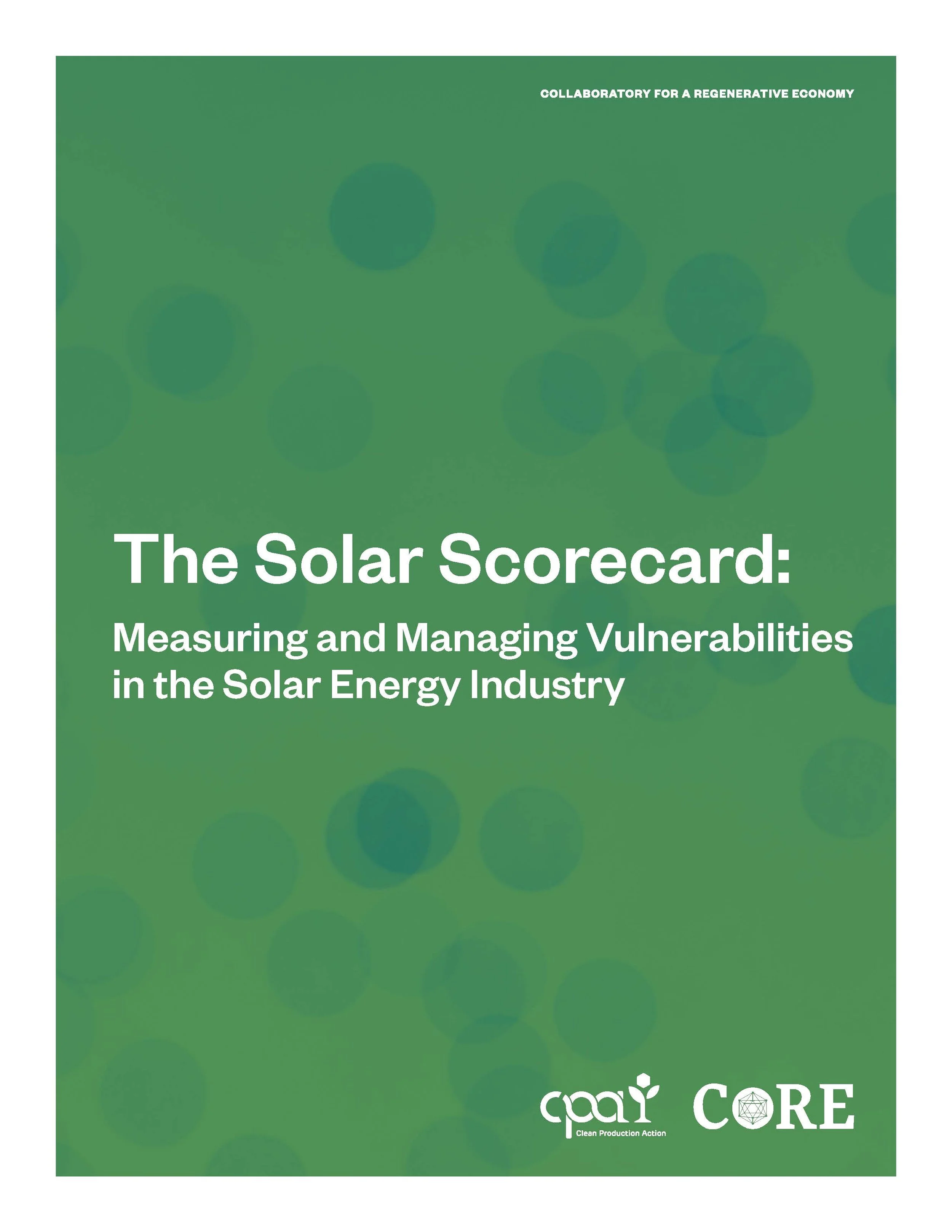
The Solar Scorecard
Measuring and Managing Vulnerabilities in the Solar Energy Industry
The Solar Scorecard announced its latest findings, determining that most solar panel manufacturers fail to meet sustainability and procurement standards. The Scorecard evaluated 44 global solar panel manufacturers on their actions and commitment to these practices. CoRE supports the Solar Scorecard team in addressing two of the most complex and challenging sustainability issues: hazardous chemical use and environmental health and justice.
> Download the Solar Scorecard report
Elements of Change Report
Learn more about the ongoing impact of our work—from using artificial intelligence to discover new materials, to helping some of the world’s largest technology companies measure their “chemical footprint,” and collaborating with leaders to create safer, healthier communities.
The renewable energy industry has the potential to significantly improve human health, safety, and the environment around the globe. Unfortunately, the industry’s products rely on toxic chemicals, from lead contained in solar cells to hydrofluoric acid used in manufacturing processes, which in turn pose challenges to the decommissioning and recycling of the products. Our innovative collaborations and data-driven tools enable business, government, and nonprofit leaders to identify and select inherently safer chemicals and sustainable materials for a healthier renewable energy economy.
Full report
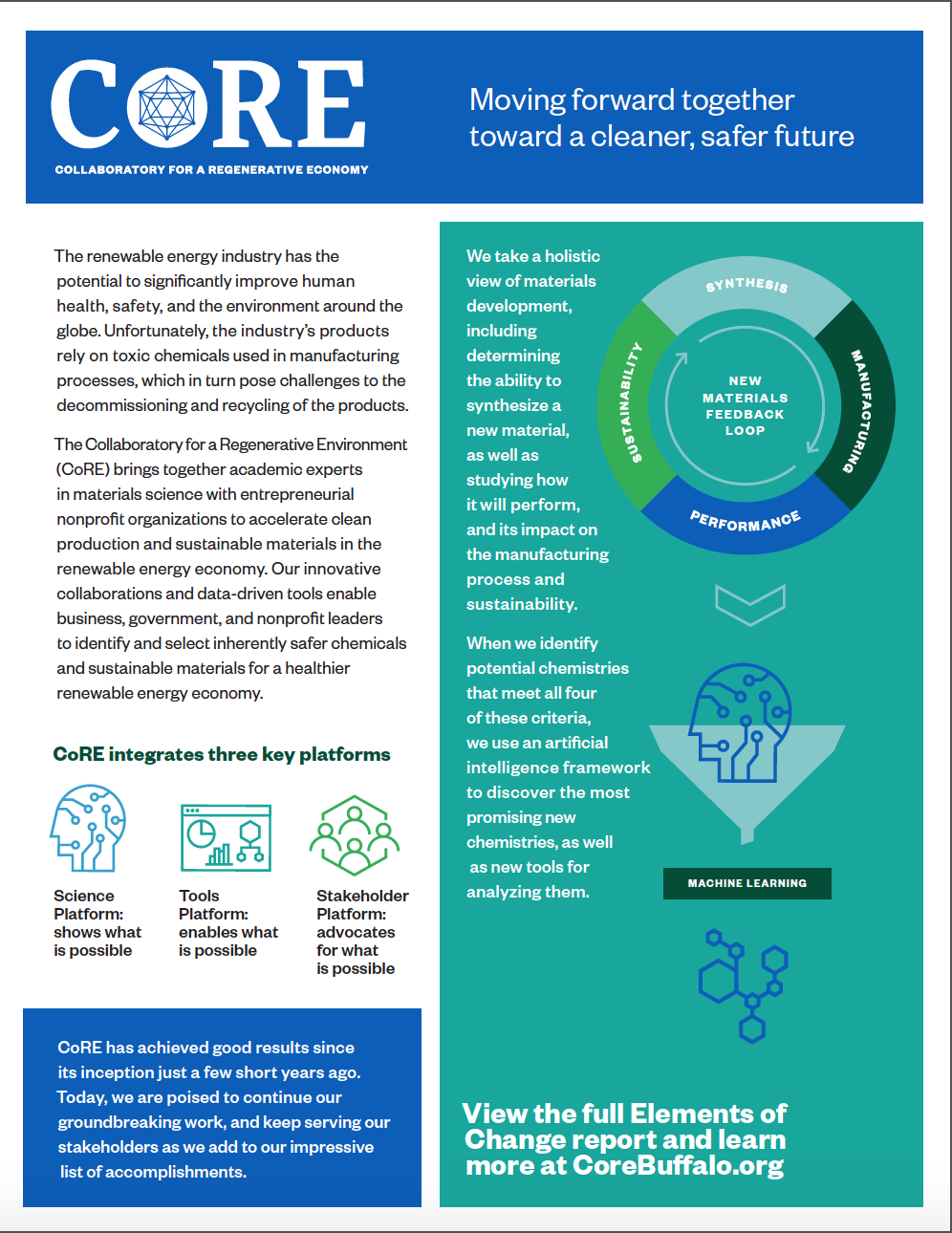
One-page overview